
 Home
Home
Share this article on


March 03, 2026
Community
A DigLib approach: the Library Living Labs
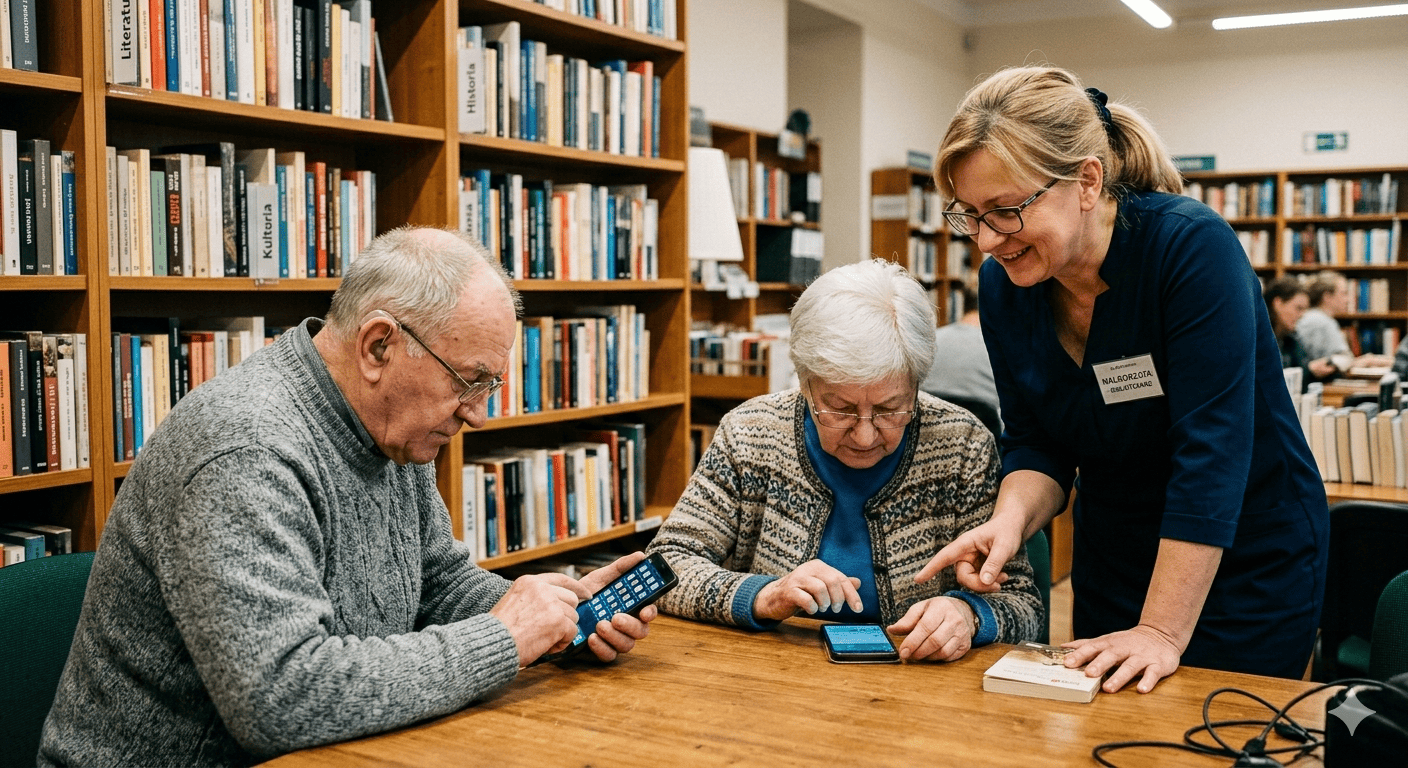
In the project’s introduction article, we mentioned that the DigLib framework will be implemented and tested in 20 public libraries across 4 European countries. The approach we chose to do so is called "the Library Living Labs". It is time that we explain the meaning of this concept and why it is relevant for the completion of the project’s deliverables. At the end of this article, we also share tips for library employees who would like to implement Living Labs in their libraries.
The general concept
A Library Living Lab is a dynamic learning environment that enables community members – adult learners, seniors, migrants, and people with diverse needs – to build practical digital skills and explore the potential of new technologies. It can be a space, a service, or a series of activities in which a trained librarian/library employee leads educational processes based on collaboration, experimentation, and responding to real community needs.
What can a Living Lab be ?
It may take the form of an IT corner, a technology club, a series of workshops or courses, a pilot library service, a learning community, or an experimental space. Each library develops its own concept and operational plan so that the Living Lab reflects local needs while remaining aligned with the DigLib framework: digital education, the project methodology, trained librarians, and use of the provided materials and immersive learning platform.
How does a Living Lab operate?
Over at least six months, the library organises five or more educational activities for at least 25 adult learners, focusing particularly on digitally excluded groups. Topics include the use of digital tools, AI and its applications, digital safety, content creation, and identifying fake news. The librarian/library employee, trained within the project, implements the programme using the methodology, handbook, educational materials, and the immersive platform. A key element is dialogue: identifying needs, testing solutions, learning together, and building confidence in navigating the digital world.
Specific roles and learnings
For the participants
They learn to use digital tools, understand AI, create digital content, practise evaluating the reliability of information, and work collaboratively. They gain competencies that directly improve their quality of life – from using e-services to developing creative interests. Thanks to that, the participants become more confident and informed digital citizens.
For librarians/ library employees
They facilitate learning, moderate discussions, support learners, connect people and resources, test new ideas, and use digital and educational tools in practice. They strengthen their own digital skills and integrate digital education into everyday library work. With the support of experts and project training, they become trusted local guides in the digital environment.
Outcomes
What do we expect the Living Lab to bring to the community?
-Strengthen digital inclusion for people with limited access to technology;
-Increase digital literacy and awareness of AI and online safety;
-Build a culture of collaboration, creativity, and lifelong learning;
-Transform the library’s image into that of a modern centre for digital competences;
-Support local development and increase community resilience to misinformation.
The Library Living Lab strengthens the community members’ ability to participate fully in the digital world and supports the development of libraries as inclusive, modern learning hubs. It is an investment in creativity, information resilience, and community well-being.
Tips for librarians/ library employees
Eight tips to follow in order to set up and run a Living Lab :
(1)Start with real needs – talk to the community members, understand their barriers and goals, and include those at risk of exclusion;
(2)Plan realistically – prepare an operational plan: topics, schedule, tools, outreach, and recruitment;
(3)Enable co-creation – involve learners in shaping topics, designing sessions, and evaluating their educational process;
(4)Teach through practice – use hands-on exercises, testing tools together, and small creative projects;
(5)Ensure a safe, open atmosphere – encourage questions, respect different learning paces, and promote peer support;
(6)Experiment – treat the Living Lab as a place to try new formats, tools, and methods;
(7)Monitor progress – measure learning outcomes and reflect on librarian/librarian employee development as a moderator;
(8)Engage local partners – collaborate with community organisations, local associations, educators, migrant and senior groups.
This article was written by Agnieszka Koszowska, from FRSI team.